
From 10 to 13 August 2026, a delegation from Suranaree University of Technology (SUT), led by Assoc. Prof. Dr. Pornsiri Jongkol, Dean of the Institute of Engineering, visited four leading science and technology universities in Taiwan. The visit aimed to strengthen partnerships in engineering education, research and innovation, future technologies, international mobility, and industry-linked talent development.
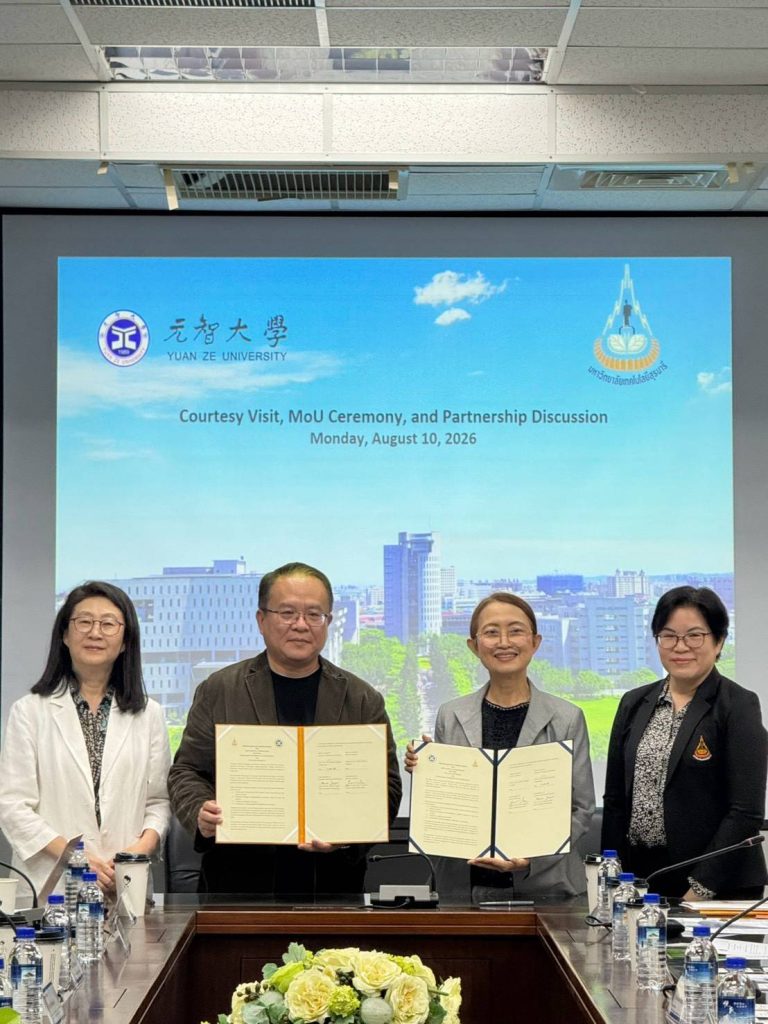
On 10 August, the delegation visited Yuan Ze University (YZU) in Taoyuan, where the two universities signed a university-level Memorandum of Understanding. Discussions focused on five strategic areas: AI and smart manufacturing, semiconductors, digital health, smart cities and the Internet of Things, and sustainability. Both sides also explored 3+1, 1+1, and 3+1+1 dual-degree pathways, curriculum mapping, credit transfer, internships, research attachments, faculty exchanges, and collaborative research. Click to read the newsletter.
On 11 August 2026, the delegation visited Lunghwa University of Science and Technology (LHU) in Taoyuan, where it was welcomed by an LHU delegation led by Professor Tzu-Hsiang Ko, President of the University. The two institutions explored the establishment of an institutional partnership focusing on industry-linked education, semiconductor and advanced communication technologies, applied research, and student mobility.
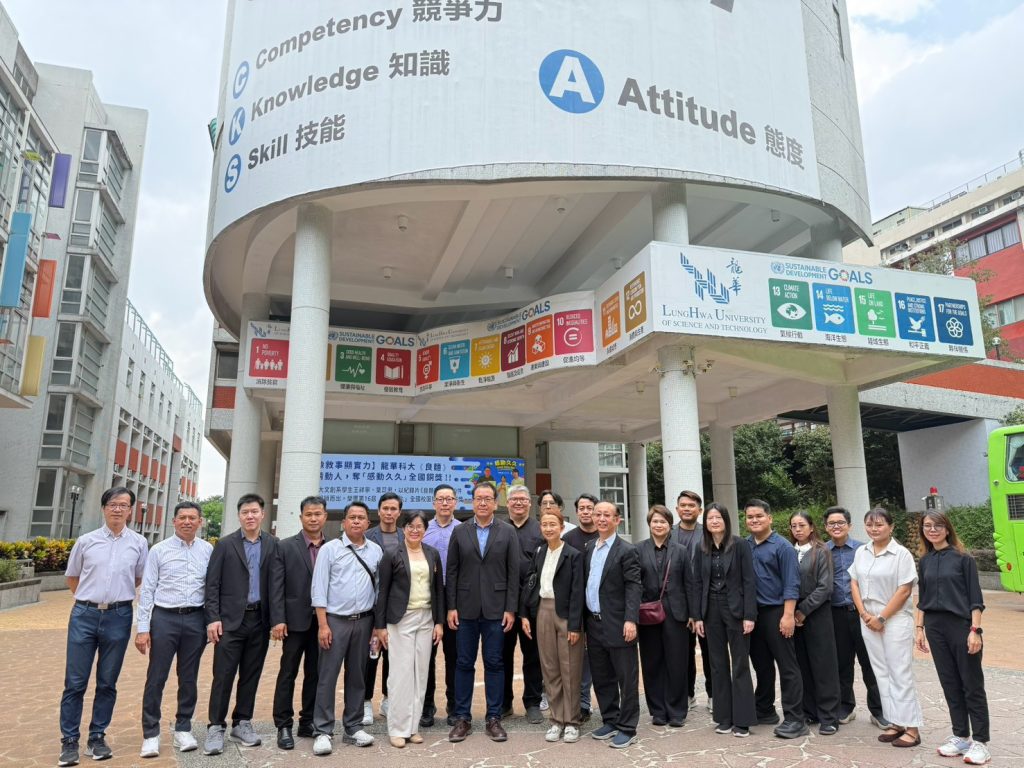
Key discussions included potential 2+2 dual bachelor’s degree programmes, 1+1 dual master’s degree programmes, and a 3+1+2 pathway connecting undergraduate study with an industry-supported master’s programme. The delegation also toured LHU’s advanced facilities for semiconductor manufacturing, 5G communications, high-speed data transmission, PCB technology, semiconductor testing, and VR/AR applications. Click to read the newsletter.
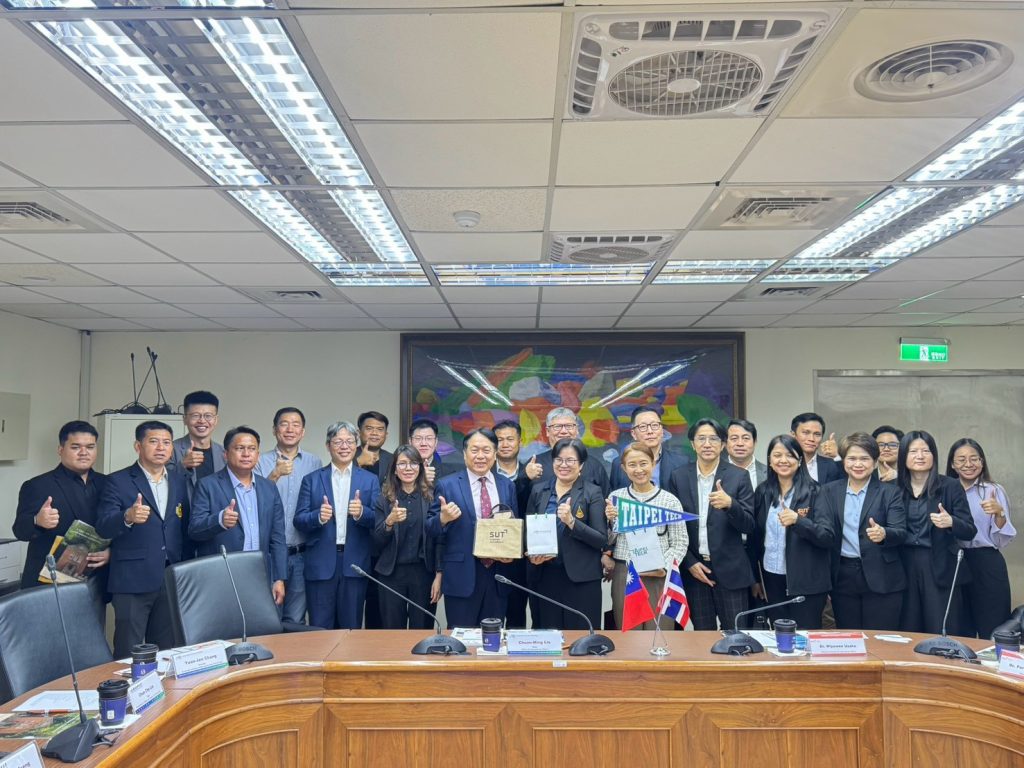
On 12 August 2026, the delegation visited two universities in Taipei. The first visit was to National Taipei University of Technology (Taipei Tech/NTUT), where the delegation was welcomed by Professor Chuan-Ming Liu, Dean of the Office of International Affairs, together with executives and representatives in manufacturing technology, electronic engineering, and molecular science and engineering.
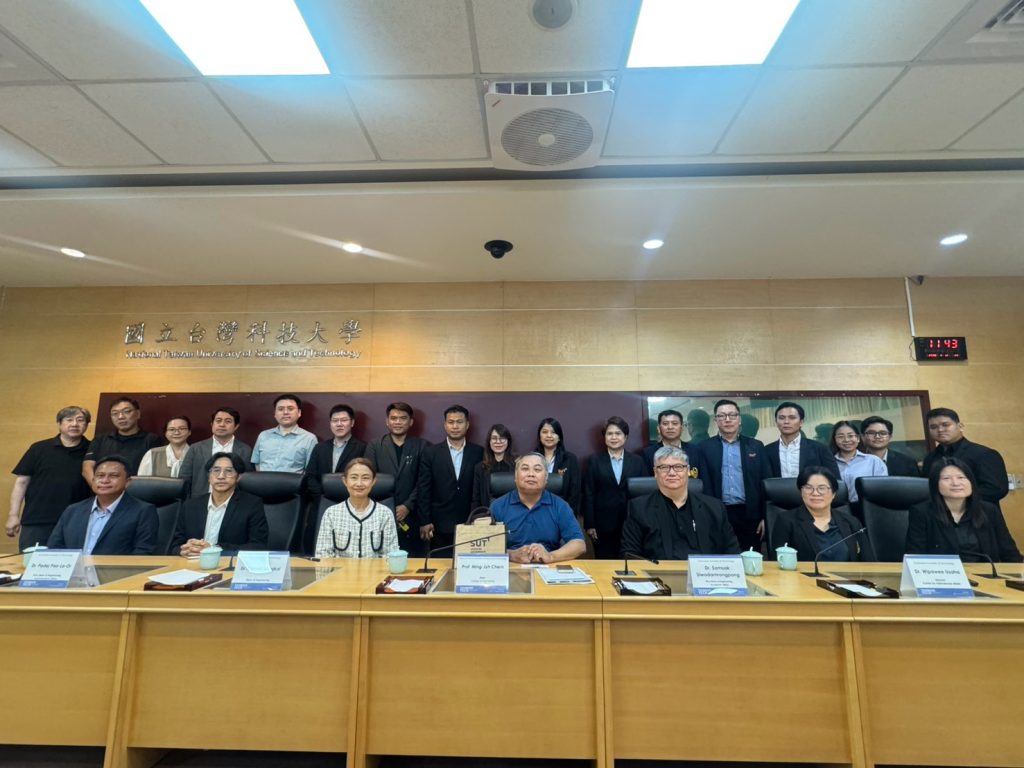
The discussions focused on establishing an institutional partnership in engineering, emerging technologies, research, innovation, and entrepreneurship. Student exchanges and internships through the Taiwan Experience Education Program (TEEP) and International Internship Project Program (IIPP) were identified as practical starting points. Both sides also explored master’s and PhD dual-degree programmes, joint research, thesis co-supervision, and opportunities linking research commercialisation with industry and student entrepreneurship. Click to read the newsletter.
Later that day, the delegation visited National Taiwan University of Science and Technology (Taiwan Tech/NTUST). It was welcomed by Dr. Ming-Jyh Chern, Dean of the College of Engineering, together with representatives from materials science and engineering, chemical engineering, civil and construction engineering, and mechanical engineering.
Potential research areas included battery technologies and electric-vehicle battery recycling, synchrotron applications, advanced materials, silicon photonics, artificial intelligence, the Internet of Things, smart systems, smart manufacturing, and renewable energy. The Synchrotron Light Research Institute located on the SUT campus was identified as an important facility that could support joint research in advanced materials and semiconductors.
SUT and Taiwan Tech also discussed expanding student exchanges, internships, and research placements through TEEP and IIPP, as well as staff mobility through the World Technology Universities Network (WTUN). Other opportunities included dual-degree programmes, joint supervision, project-based learning, and industry-linked pathways, particularly through potential connections with Delta Electronics in Thailand. Click to read the newsletter.
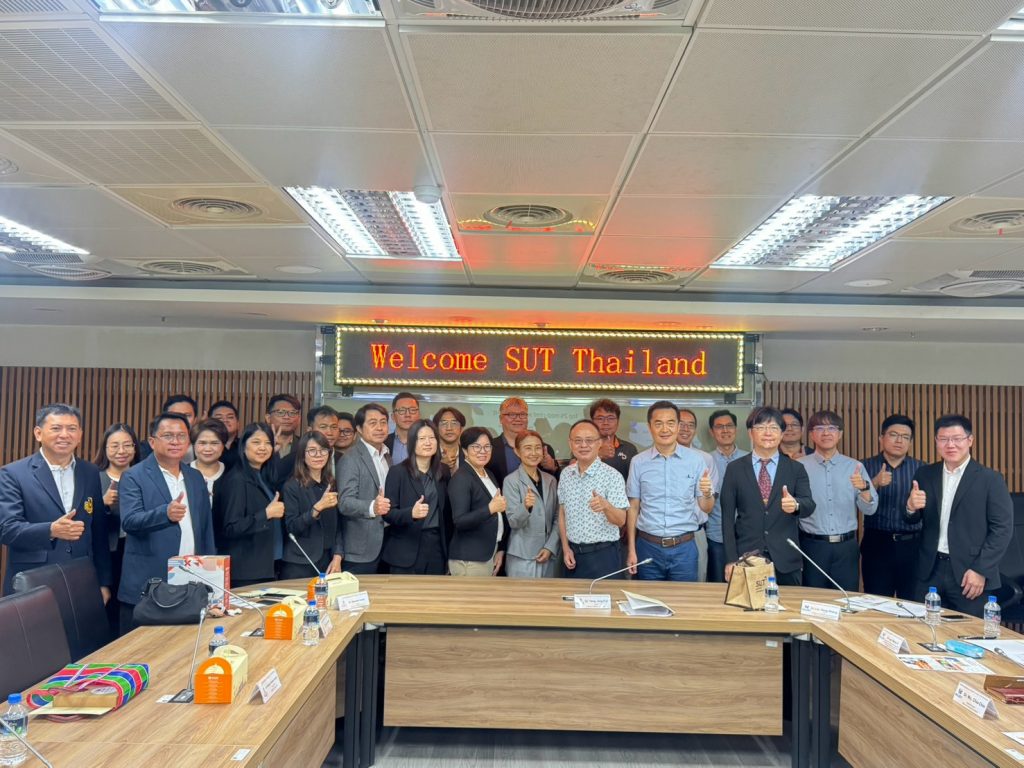
On 13 August 2026, the SUT delegation visited National Kaohsiung University of Science and Technology (NKUST) in Kaohsiung. The delegation was welcomed by Professor Dr. Jing-Fuh Yang (Albert), Dean of the Office of International Affairs and the College of Management, together with university executives and representatives from relevant engineering disciplines.
The meeting identified several high-potential areas for collaboration, including semiconductor and AI talent development, smart manufacturing and mechatronics, Building Information Modelling and smart infrastructure, green technology and net-zero development, and geological and environmental engineering.
Both universities also explored student exchanges and internships, faculty and researcher mobility, guest teaching and co-teaching, project-based learning, curriculum mapping, credit recognition, and future dual-degree programmes. Master’s-level collaboration was identified as a practical starting point for developing concrete academic activities between the two institutions.
The visits to the four universities marked an important step in SUT’s efforts to expand its partnerships with Taiwan through an integrated approach connecting education, research, innovation, and industry. These partnerships are expected to create new opportunities for students, faculty members, and researchers through exchanges, internships, joint research, and international academic programmes, while contributing to the development of future-ready talent and technologies in Thailand, Taiwan, and the wider region. Click to read the newsletter.
มทส. เชื่อมเครือข่าย 4 มหาวิทยาลัยไต้หวัน ต่อยอดวิจัย นวัตกรรม การแลกเปลี่ยน และความร่วมมือกับภาคอุตสาหกรรม, 11-13 สิงหาคม 2569
ระหว่างวันที่ 11–13 สิงหาคม 2569 คณะผู้แทนจากมหาวิทยาลัยเทคโนโลยีสุรนารี (มทส.) นำโดย รองศาสตราจารย์ ดร.พรศิริ จงกล คณบดีสำนักวิชาวิศวกรรมศาสตร์ เดินทางเยือนมหาวิทยาลัยด้านวิทยาศาสตร์และเทคโนโลยีชั้นนำ 4 แห่งในไต้หวัน เพื่อพัฒนาเครือข่ายความร่วมมือด้านการศึกษาวิศวกรรมศาสตร์ การวิจัยและนวัตกรรม เทคโนโลยีแห่งอนาคต การแลกเปลี่ยนนักศึกษาและบุคลากร ตลอดจนการพัฒนากำลังคนร่วมกับภาคอุตสาหกรรม
วันที่ 10 สิงหาคม 2569 คณะผู้แทนเยือน Yuan Ze University (YZU) ณ เมืองเถาหยวน โดย มทส. และ YZU ได้ลงนามบันทึกความเข้าใจระดับมหาวิทยาลัย พร้อมหารือแนวทางพัฒนาความร่วมมือใน 5 สาขายุทธศาสตร์ ได้แก่ ปัญญาประดิษฐ์และการผลิตอัจฉริยะ เซมิคอนดักเตอร์ สุขภาพดิจิทัล เมืองอัจฉริยะและอินเทอร์เน็ตของสรรพสิ่ง และความยั่งยืน นอกจากนี้ ยังได้หารือการพัฒนาหลักสูตรสองปริญญารูปแบบ 3+1, 1+1 และ 3+1+1 การเทียบโอนหน่วยกิต การฝึกงานและการวิจัยระยะสั้น ตลอดจนการแลกเปลี่ยนอาจารย์และการวิจัยร่วม
วันที่ 11 สิงหาคม 2569 คณะผู้แทน มทส. เยือน Lunghwa University of Science and Technology (LHU) ณ เมืองเถาหยวน และได้รับการต้อนรับจากคณะผู้บริหารของ LHU นำโดย Professor Tzu-Hsiang Ko อธิการบดี ทั้งสองฝ่ายหารือแนวทางจัดตั้งความร่วมมือระดับสถาบัน โดยให้ความสำคัญกับการจัดการศึกษาที่เชื่อมโยงกับภาคอุตสาหกรรม เทคโนโลยีเซมิคอนดักเตอร์และการสื่อสารขั้นสูง การวิจัยประยุกต์ และการแลกเปลี่ยนนักศึกษา
ประเด็นสำคัญประกอบด้วยการพัฒนาหลักสูตรสองปริญญารูปแบบ 2+2 ระดับปริญญาตรี รูปแบบ 1+1 ระดับปริญญาโท และเส้นทางการศึกษาแบบ 3+1+2 ซึ่งเชื่อมต่อการศึกษาระดับปริญญาตรีกับหลักสูตรปริญญาโทที่สนับสนุนโดยภาคอุตสาหกรรม นอกจากนี้ คณะผู้แทนยังได้เยี่ยมชมศูนย์การผลิตเซมิคอนดักเตอร์และห้องปฏิบัติการด้านการสื่อสาร 5G ระบบส่งข้อมูลความเร็วสูง แผงวงจรพิมพ์ การทดสอบเซมิคอนดักเตอร์ และเทคโนโลยี VR/AR ของ LHU
วันที่ 12 สิงหาคม 2569 คณะผู้แทนเดินทางเยือนมหาวิทยาลัย 2 แห่งในกรุงไทเป เริ่มจาก National Taipei University of Technology (Taipei Tech/NTUT) โดยได้รับการต้อนรับจาก Professor Chuan-Ming Liu คณบดี Office of International Affairs พร้อมผู้บริหารและผู้แทนจากหน่วยงานด้านเทคโนโลยีการผลิต วิศวกรรมอิเล็กทรอนิกส์ และวิทยาศาสตร์และวิศวกรรมโมเลกุล
การหารือมุ่งสู่การจัดตั้งความร่วมมือระดับสถาบันด้านวิศวกรรมศาสตร์ เทคโนโลยีเกิดใหม่ การวิจัย นวัตกรรม และการเป็นผู้ประกอบการ ตลอดจนการเปิดโอกาสให้นักศึกษาเข้าร่วมโครงการแลกเปลี่ยนและฝึกงานผ่าน Taiwan Experience Education Program (TEEP) และ International Internship Project Program (IIPP) นอกจากนี้ ทั้งสองมหาวิทยาลัยยังได้แลกเปลี่ยนแนวคิดเกี่ยวกับหลักสูตรสองปริญญาระดับปริญญาโทและปริญญาเอก การวิจัยร่วม การกำกับวิทยานิพนธ์ร่วม และการนำผลงานวิจัยไปใช้ประโยชน์เชิงพาณิชย์
ในวันเดียวกัน คณะผู้แทนได้เยือน National Taiwan University of Science and Technology (Taiwan Tech/NTUST) และได้รับการต้อนรับจาก Dr. Ming-Jyh Chern คณบดี College of Engineering พร้อมด้วยผู้แทนจากสาขาวิศวกรรมวัสดุ วิศวกรรมเคมี วิศวกรรมโยธาและการก่อสร้าง และวิศวกรรมเครื่องกล
ทั้งสองฝ่ายได้กำหนดประเด็นวิจัยที่มีศักยภาพร่วมกัน ได้แก่ เทคโนโลยีแบตเตอรี่และการรีไซเคิลแบตเตอรี่รถยนต์ไฟฟ้า การประยุกต์ใช้แสงซินโครตรอน วัสดุขั้นสูง ซิลิคอนโฟโทนิกส์ ปัญญาประดิษฐ์ อินเทอร์เน็ตของสรรพสิ่ง ระบบอัจฉริยะ การผลิตอัจฉริยะ และพลังงานหมุนเวียน โดยสถาบันวิจัยแสงซินโครตรอนซึ่งตั้งอยู่ภายในพื้นที่ มทส. สามารถเป็นโครงสร้างพื้นฐานสำคัญสำหรับการพัฒนางานวิจัยร่วมด้านวัสดุและเซมิคอนดักเตอร์
นอกจากนี้ มทส. และ Taiwan Tech ยังหารือการขยายกิจกรรมแลกเปลี่ยนนักศึกษา การฝึกงาน และการวิจัยระยะสั้นผ่านโครงการ TEEP และ IIPP รวมถึงการแลกเปลี่ยนบุคลากรผ่านเครือข่าย World Technology Universities Network (WTUN) การพัฒนาหลักสูตรสองปริญญา การกำกับวิทยานิพนธ์ร่วม และการเชื่อมโยงนักศึกษากับภาคอุตสาหกรรม โดยเฉพาะโอกาสความร่วมมือกับ Delta Electronics ในประเทศไทย
วันที่ 13 สิงหาคม 2569 คณะผู้แทน มทส. เยือน National Kaohsiung University of Science and Technology (NKUST) ณ เมืองเกาสง โดยได้รับการต้อนรับจาก Professor Dr. Jing-Fuh Yang (Albert) คณบดี Office of International Affairs และ College of Management พร้อมคณะผู้บริหารและผู้แทนจากสาขาวิศวกรรมที่เกี่ยวข้อง
การหารือครอบคลุมการพัฒนากำลังคนด้านเซมิคอนดักเตอร์และปัญญาประดิษฐ์ การผลิตอัจฉริยะและเมคคาทรอนิกส์ แบบจำลองสารสนเทศอาคารและโครงสร้างพื้นฐานอัจฉริยะ เทคโนโลยีสีเขียวและการมุ่งสู่การปล่อยก๊าซเรือนกระจกสุทธิเป็นศูนย์ ตลอดจนวิศวกรรมธรณีและสิ่งแวดล้อม
ทั้งสองมหาวิทยาลัยยังได้หารือการแลกเปลี่ยนนักศึกษาและการฝึกงาน การแลกเปลี่ยนอาจารย์และนักวิจัย การสอนร่วม การเรียนรู้ผ่านโครงงาน การเทียบเคียงรายวิชาเพื่อรองรับการโอนหน่วยกิต และการพัฒนาหลักสูตรสองปริญญาในอนาคต โดยเห็นว่าความร่วมมือระดับปริญญาโทเป็นแนวทางที่สามารถริเริ่มและพัฒนาให้เกิดผลเป็นรูปธรรมได้
การเยือนมหาวิทยาลัยทั้ง 4 แห่งในครั้งนี้นับเป็นก้าวสำคัญของ มทส. ในการขยายเครือข่ายความร่วมมือกับไต้หวันอย่างเป็นระบบ โดยเชื่อมโยงการศึกษา การวิจัย นวัตกรรม และภาคอุตสาหกรรมเข้าด้วยกัน พร้อมเปิดโอกาสใหม่ให้แก่นักศึกษา คณาจารย์ และนักวิจัย ทั้งในด้านการแลกเปลี่ยน การฝึกงาน การทำวิจัยร่วม และการพัฒนาหลักสูตรนานาชาติ เพื่อร่วมกันผลิตกำลังคนและองค์ความรู้ที่ตอบสนองต่ออุตสาหกรรมและเทคโนโลยีแห่งอนาคตของประเทศไทย ไต้หวัน และภูมิภาค